
1. Plan team and scope
Document HACCP team members, roles, plan scope, site, and product so the analysis begins with defined responsibility and context.
Connected, reviewable food safety
AvailableQSigma360 helps food safety teams establish a clear plan context and connect products, intended use, and process steps with hazards, controls, and monitoring records. When a deviation occurs, decisions, actions, and evidence can be followed without separating the written plan from day-to-day operations.
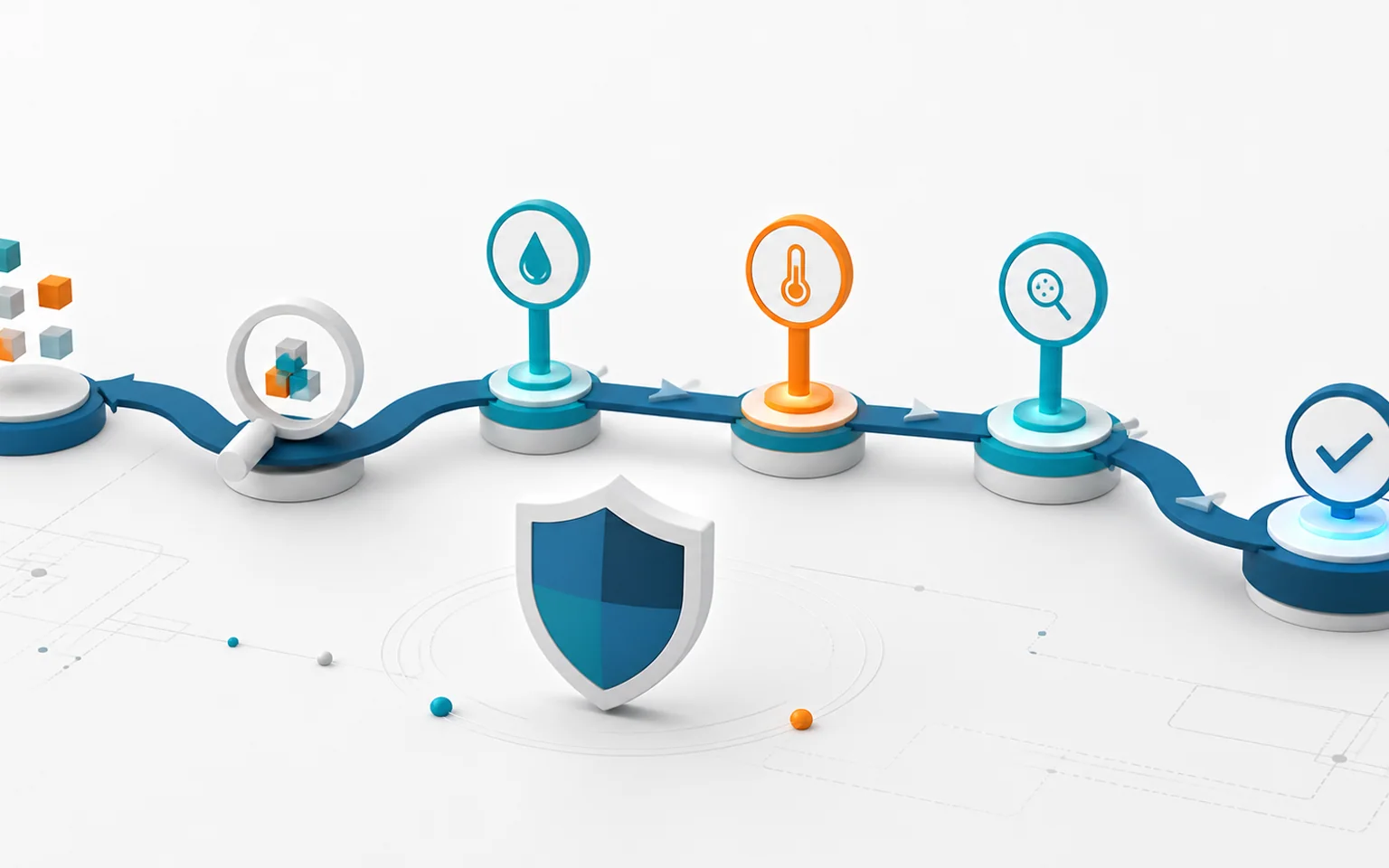
A HACCP plan loses practical value when flow diagrams, hazard analysis, and control criteria are disconnected from monitoring, deviations, and verification records. QSigma360 provides a structured workspace for developing and maintaining the plan, then relating its controls to production activity, product holds, traceability, withdrawals, and recalls.
This connection helps teams understand why a control was selected, what must be monitored, what happened during a deviation, and who reviewed the response. The platform does not replace the HACCP team or qualified technical judgment; it makes the required context, evidence, and review path easier to manage.
Document HACCP team members, roles, plan scope, site, and product so the analysis begins with defined responsibility and context.
Organize product characteristics, ingredients, intended use, and relevant consumer considerations, and connect them to the hazard analysis and plan review.
Build the process sequence and associate each step with supporting information and attachments for flow-diagram review and on-site confirmation.
Record biological, chemical, physical, and other applicable hazards, their rationale, evaluation, and proposed controls under your approved methodology.
Support evaluation and classification of controls as PRP, OPRP, or CCP, with documented rationale and decision-tree responses where applicable.
Connect monitoring requirements to results, deviations, corrections, verification, and validation, with links to hold, traceability, withdrawal, and recall processes when needed.
Food safety events can connect with documents, nonconformance, CAPA, product holds, traceability, withdrawals, recalls, and reports. Permissions and review govern each action, while hazard classification, control selection, and product-release decisions remain with qualified personnel. If AI assists with drafting or analysis, its output remains a suggestion until a person reviews and accepts it through the appropriate process.
Illustrative view — no customer data
Make the plan part of operations, not a static file
Capabilities for connected food safety
How the plan moves into practice
Connected controls, accountable decisions
No. The platform helps the team structure information, analysis, evidence, and review. Plan validity, technical decisions, and approval remain the responsibility of qualified, authorized people.
Yes. QSigma360 supports control documentation, classification logic, and decision rationale, including decision-tree responses when used within the organization’s methodology.
The result, deviation, correction, and follow-up can be documented and linked to product hold, nonconformance, CAPA, or traceability according to impact and the approved decision.
No. QSigma360 supports management of requirements, records, and evidence. It does not guarantee compliance, award certification, or replace professional verification or a certification body’s assessment.
Request a demonstration of how QSigma360 takes your team from product context and hazard analysis to monitoring, deviation response, and verification.
Start with a tailored demo built around your organization’s needs.