



QSigma360

Export-Oriented Manufacturers | Current industry focus

Primary Market — capabilities depend on enabled modules and configuration

Unify quality evidence when markets and customers differ but accountability remains one.

QSigma360 helps export-oriented food and beverage manufacturers connect customer and market requirements with documents, records, audits, suppliers, batches, complaints, and corrective actions. Teams can trace evidence to its source, version, owner, and status instead of creating a separate, unsynchronized pack for every audit, customer, or document request.

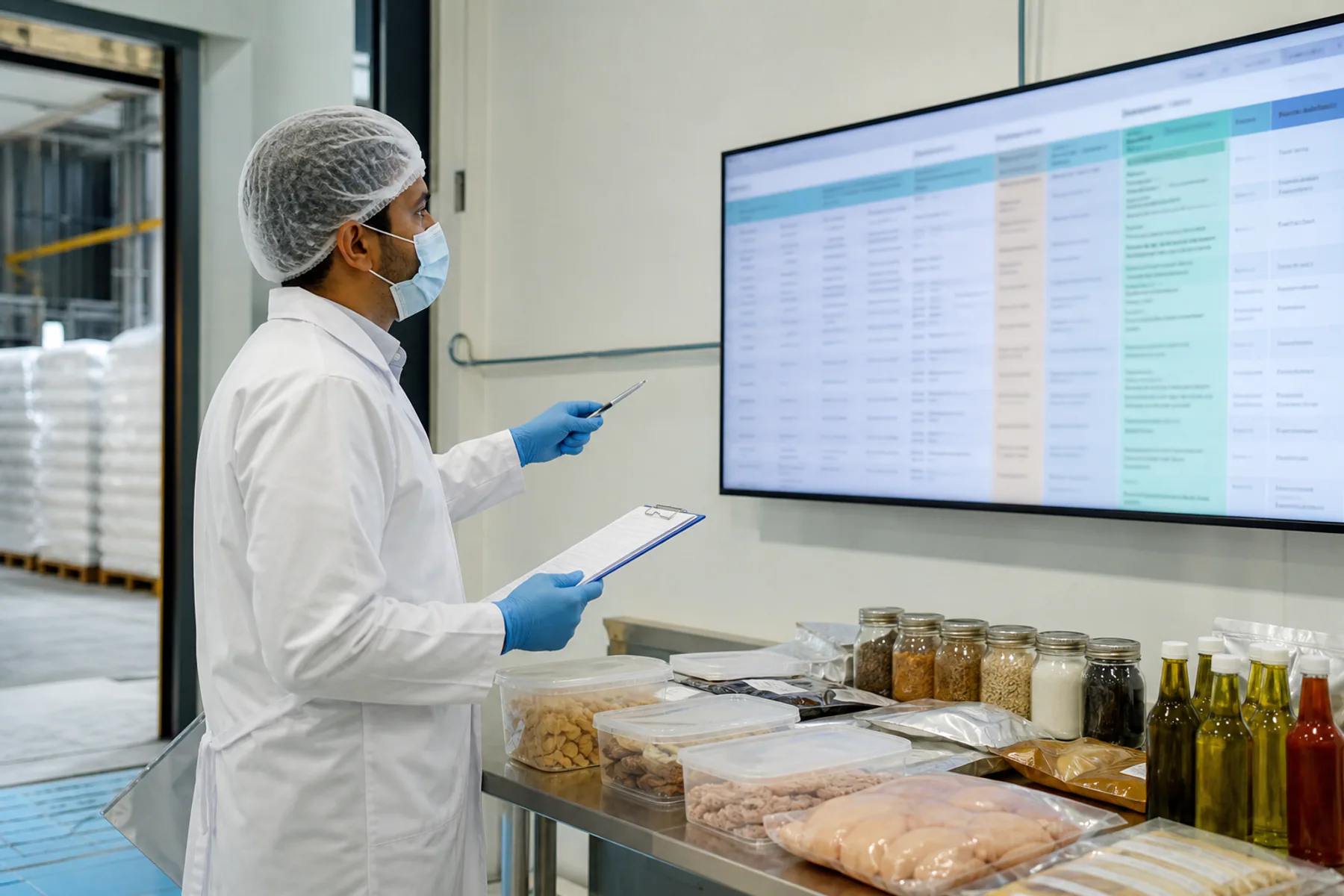
Quality review of a food shipment prepared for export

Who is this page for?

This page is for food manufacturers and processors selling across countries, retailers, or industrial customers and facing recurring audits, document requests, contractual specifications, and different regulatory expectations. It supports leadership, quality, food safety, compliance, export, warehouse, procurement, and customer-service teams. Sites, products, customers, markets, and workflows can be configured while legal and regulatory interpretation stays with qualified specialists.

Quality and export teams collaborating before shipment preparation

The challenge: different requirements should not create parallel quality systems

A specification, label, test, or customer form may differ by market even when batch, supplier, and process are shared. Copying files and spreadsheets creates conflicting versions, lost decision history, and weak closure evidence. QSigma360 provides a framework for connecting requirements to evidence and work, but it does not automatically contain every destination rule, decide export eligibility, or replace customs and logistics systems.

Review of packaging and label differences between export markets

Six capabilities grounded in export operations

Review of export-market and customer requirements

1. Requirement-to-evidence mapping

Configure standards, customer, and market requirements and connect them with relevant documents, records, checklists, and actions. Supporting a framework or standard does not mean every clause or update is automatically included; specialists must review scope, version, and mapping validity.


Internal audit of records in an export-oriented facility

2. Traceable audits and findings

Organize audit plan, scope, checklist, evidence, and outcomes, then connect a finding to nonconformance or CAPA through verification. Auditor, certification-body, and customer judgments remain independent, and the system does not guarantee an audit result.

Verification of supplied-material quality and traceability

3. Supplier-quality visibility

Connect qualification, documents, performance, audits, and events for suppliers contributing to exported products. Core internal capabilities depend on configuration, while a complete independent Supplier Portal is not a current blanket promise.

Traceability exercise connecting production batches to shipments

4. Traceability, hold, and recall readiness

Connect available material, run, packing, storage, customer, and shipment references and conduct a trace or mock-recall exercise with scope, results, and gaps. The platform does not guarantee a fixed completion time or complete response without accurate data, effective processes, and validated integrations.

Investigation of a customer complaint linked to an export shipment

5. Customer complaints and corrective action

Bring complaint, evidence, batch, containment, investigation, and approved response into one record, connecting CAPA or change where needed. AI does not send the response or close the complaint, and the complete Customer Workspace remains on the roadmap.

Preparation of a controlled evidence pack for external review

6. Controlled documents and reports

Retain versions, reviews, approvals, and history and assemble relevant approved outputs into a reviewable evidence pack. A document does not become valid for a market simply because it is stored in the platform; content needs verification, authorization, and governed sharing.

Connected products and modules

An export manufacturer may combine QSigma360 Quality Management, QSigma360 Food Safety, QSigma360 Documents, and QSigma360 Supplier Quality with Audits, Nonconformance and Complaints, CAPA, Change Control, Traceability and Recall Readiness, and Reports. Standalone training and external workspaces depend on roadmap status. The AI Quality Copilot can suggest summaries, wording, or questions where enabled; it cannot provide a regulatory judgment or formal authorization.

Connected batch, audit, supplier, and shipment evidence

Governance and boundaries

Permissions separate evidence preparation, review, authorization, and sharing and protect customer, market, and supplier information. QSigma360 does not guarantee certification, shipment acceptance, or a successful audit and does not replace regulatory counsel, a customs broker, ERP, or TMS. Specialists must confirm current destination requirements, and authorized people must review any AI output before use.

Governed collaboration between a manufacturer and international customer
Workflow from the governing content

The path in six steps

  1. 1

    Define scope: Identify product, market, customer, site, requirements, and accountable reviewers.

  2. 2

    Connect evidence: Map each requirement to the relevant document, record, check, or audit in the configured scope.

  3. 3

    Operate and monitor: Capture activities, batches, approvals, and evidence under approved procedures.

  4. 4

    Identify a gap: Open a finding, nonconformance, or complaint and define scope, containment, and risk.

  5. 5

    Close action under governance: Follow CAPA or change, evidence, and effectiveness review to an authorized decision.

  6. 6

    Prepare for review: Assemble approved evidence and confirm completeness and validity before sharing or submission.

Export-shipment quality path from production to loading

Frequently asked questions

Does the platform contain every requirement for every country?

No. Organizations can configure and connect approved requirements and references, but laws and expectations change. Version, scope, and interpretation must be verified through reliable sources and qualified specialists.

Does QSigma360 guarantee a customer or certification audit result?

No. It supports organized work, evidence, and traceability, while outcomes depend on implementation, record accuracy, team competence, and independent auditor judgment.

Does it manage customs or commercial shipping documents?

It is not a trade, customs, ERP, or TMS replacement. Relevant quality and shipping references may be linked, while broader integration requires a separate technical and contractual scope.

Can a customer-specific evidence pack be prepared?

Authorized outputs and records can be assembled according to configuration and permissions. Every pack must be reviewed, approved, and checked for unauthorized disclosure before sharing.

Let every audit request begin with organized evidence, not a reconstruction of the factory story.

See how QSigma360 can connect your markets and customers with the relevant quality operations, batches, and actions.

Start with a tailored demo built around your organization’s needs.